
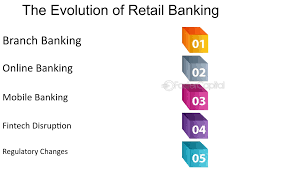
Retail banking has undergone a dramatic transformation over the past century. What once revolved around long queues at physical branches has now evolved into seamless, 24/7 digital ecosystems powered by artificial intelligence, mobile technology, and cloud computing. The evolution of retail banking reflects broader technological, economic, and social changes—reshaping how individuals manage money, access credit, and interact with financial institutions.
In this comprehensive guide, we explore how retail banking evolved from traditional brick-and-mortar branches to today’s fully integrated digital ecosystems—and what the future holds.
1. The Era of Traditional Branch Banking
For much of the 20th century, retail banking was defined by physical branches. Customers visited local banks to:
- Open savings and checking accounts
- Deposit or withdraw cash
- Apply for loans and mortgages
- Seek financial advice
Institutions such as Wells Fargo and HSBC built vast branch networks to establish trust and community presence.
Key Characteristics of Traditional Banking:
- Face-to-face customer service
- Paper-based documentation
- Limited banking hours
- Manual record-keeping
While branches fostered personal relationships, operations were often slow and resource-intensive.
2. The Rise of ATMs and Electronic Banking
The introduction of Automated Teller Machines (ATMs) in the late 1960s marked the first major shift in retail banking. Customers could withdraw cash outside normal business hours, revolutionizing convenience.
By the 1980s and 1990s, banks began adopting core banking systems and electronic payment networks. Institutions like Citibank pioneered global ATM networks, making cross-border transactions easier.
Impact of Electronic Banking:
- 24/7 cash access
- Faster transaction processing
- Reduced dependency on physical branches
- Improved operational efficiency
This period laid the foundation for digital transformation.
3. Online Banking: The Internet Revolution
The late 1990s and early 2000s introduced online banking platforms. Customers could now:
- Check account balances
- Transfer funds
- Pay bills online
- Download bank statements
Banks such as Bank of America invested heavily in secure web portals, enabling customers to manage finances from home.
Benefits of Online Banking:
- Greater convenience
- Reduced operational costs
- Enhanced customer control
- Expanded service accessibility
Online banking shifted retail banking from branch-centric to customer-centric.
4. Mobile Banking and Fintech Disruption
The smartphone revolution accelerated digital adoption. With the launch of the iPhone in 2007, mobile banking apps quickly became mainstream.
Digital-first banks and fintech companies emerged, challenging traditional institutions. Companies like PayPal and Square (now Block) introduced innovative payment solutions, while neobanks offered fully app-based banking experiences.
Features of Mobile Banking:
- Instant payments and transfers
- Biometric authentication
- Real-time transaction alerts
- Mobile check deposits
- AI-powered chat support
Mobile banking redefined convenience and customer expectations.
5. The Emergence of Digital Ecosystems
Today, retail banking extends beyond basic transactions. Modern banks operate within digital ecosystems—integrated platforms that combine financial services with lifestyle solutions.
For example, JPMorgan Chase integrates budgeting tools, investment platforms, and credit monitoring into its digital environment.
What Defines a Digital Banking Ecosystem?
- Open banking APIs
- Embedded finance solutions
- AI-driven personalization
- Partnerships with fintech startups
- Cloud-based infrastructure
Banks now collaborate with third-party providers to deliver seamless customer journeys across payments, lending, insurance, and investments.
6. Key Technologies Driving Retail Banking Transformation
1. Artificial Intelligence (AI)
AI enables fraud detection, credit scoring, chatbots, and personalized recommendations.
2. Blockchain
Blockchain enhances security, transparency, and cross-border payments.
3. Cloud Computing
Cloud platforms improve scalability and reduce infrastructure costs.
4. Open Banking
Open APIs allow secure data sharing between banks and fintech firms.
These technologies collectively power the modern digital banking ecosystem.
7. Benefits of Digital Retail Banking
The shift from traditional branches to digital ecosystems provides significant advantages:
For Customers:
- 24/7 accessibility
- Faster services
- Lower fees
- Personalized financial insights
For Banks:
- Reduced operational costs
- Enhanced data analytics
- Improved risk management
- Broader market reach
Digital transformation has made banking more inclusive and efficient.
8. Challenges in the Digital Banking Era
Despite progress, retail banks face challenges:
- Cybersecurity threats
- Data privacy concerns
- Regulatory compliance
- Digital divide among customers
- Competition from fintech startups
Balancing innovation with security remains a critical priority.
9. The Future of Retail Banking
The next phase of retail banking will likely include:
- Hyper-personalized AI-driven financial planning
- Embedded finance within e-commerce platforms
- Central Bank Digital Currencies (CBDCs)
- Enhanced biometric security
- Sustainable and ESG-focused banking products
As digital ecosystems mature, traditional branches may transform into advisory hubs rather than transaction centers.
Conclusion
The evolution of retail banking—from physical branches to fully integrated digital ecosystems—illustrates how technology reshapes industries. What began with in-person transactions at neighborhood banks has evolved into AI-powered, mobile-first platforms offering seamless financial experiences.
Retail banking is no longer just about storing money; it’s about delivering connected, intelligent financial services within broader digital ecosystems. Institutions that embrace innovation while maintaining trust and security will lead the next generation of banking.
FAQs
1. What is retail banking?
Retail banking provides financial services such as savings accounts, loans, and payment services to individual consumers.
2. How has technology impacted retail banking?
Technology has enabled online banking, mobile apps, AI-driven personalization, and digital ecosystems.
3. What is a digital banking ecosystem?
A digital banking ecosystem is an integrated platform offering interconnected financial services and third-party solutions through digital channels.
4. Are traditional bank branches disappearing?
While many branches are closing, they are evolving into advisory and relationship-focused centers.